

Zakat climate change is a highly relevant topic of discussion, given the increase in environmental disasters that directly impact people’s lives. Floods, landslides, and clean water crises no longer occur separately from human activities. This situation raises important questions about the role of zakat in responding to environmental damage and its impact on vulnerable groups.
Climate change is not just an environmental issue, but also a humanitarian issue. When nature is damaged, the poor and vulnerable are often the first to bear the consequences. Homes are destroyed, livelihoods are lost, and access to basic needs becomes increasingly limited. In situations like this, zakat has great potential to be a solution that promotes social justice.
Read also: Climate Change and Signs of Damage to the Earths Surface
Understanding Climate Change from a Social Perspective
Climate change refers to long-term changes in climate patterns that affect temperature, rainfall, and the balance of nature. Global warming drives changes in the water cycle, extreme weather, and environmental degradation in various regions. The impact is not limited to the destruction of nature, but extends to human life in general.
Communities living close to nature feel the most immediate impact. Farmers face unpredictable planting seasons. Fishermen struggle to read weather patterns. Residents in upstream and downstream areas face the risk of recurring floods. Environmental damage creates economic pressure that further exacerbates structural poverty. In this context, climate change zakat needs to be understood as a response to the social impacts of environmental damage.
Read also: The Environment is Getting Worse, Is This a Sign That the End of the World is Near?
The Principle of Zakat and the Purpose of Protecting Life
Zakat in Islam aims to maintain human life and dignity. The Qur’an mentions eight groups of zakat recipients, including the poor, the needy, and ibnu sabil. These groups are often the most affected when environmental disasters occur.
Allah SWT says, “Zakat is only for the poor, the needy, those who collect it, those whose hearts are to be reconciled, to free slaves, those in debt, for the cause of Allah, and for the wayfarer.” (QS. At-Taubah: 60).
The above verse shows that zakat serves to protect life and ease social burdens. Thus, social inequality in society can be narrowed by the existence of zakat for these eight groups. Environmental damage around us can cause disasters that leave many people homeless, without income, and without access to clean water. Zakat assistance can be part of the effort to restore the lives of the mustahik.
Read also: Zakat for the Environment Helps Restore Damaged Ecosystems
Is Zakat for Climate Change Permissible?
One of the recipients of the eight categories of mustahik is fi sabilillah. A number of contemporary scholars discuss the meaning of fi sabilillah with an approach that is more in line with the challenges of the times. Yusuf al-Qaradawi, for example, explains that fi sabilillah is not limited to the context of war, but includes any major effort aimed at maintaining and upholding the interests of the people. From this perspective, activities that protect human life, prevent damage, and preserve the environment can fall under fi sabilillah if their benefits are clear and widely felt.
A similar view can also be found in the writings of Muhammad Abduh and Rasyid Ridha in Tafsir al-Manar. Both emphasize that the struggle in the way of Allah must be understood contextually, according to the needs of the people in each era. As long as an effort aims to protect life, prevent harm, and strengthen the welfare of society, it does not deviate from the spirit of fi sabilillah. This approach is often referred to in contemporary fiqh studies, including in discussions about the role of zakat in addressing today’s social and environmental issues.
Efforts to protect the environment that directly impact human safety and life can fall within this framework, as long as the benefits are clear and target groups that are entitled to receive zakat. Programs that aim to reduce the impact of disasters, restore water sources, and maintain the sustainability of poor communities have a strong overlap with the objectives of zakat. Zakat climate change is not directed solely at environmental issues, but at protecting humans from the effects of natural destruction.
The Prophet Muhammad said, “The best of people are those who are most beneficial to others.” (HR. Ahmad). This hadith emphasizes that the value of usefulness is an important measure in social work, including zakat management.
Read also: Zakat for Humanitarian Aid Accelerates Recovery in Affected Areas
The Impact of Environmental Damage on Mustahik
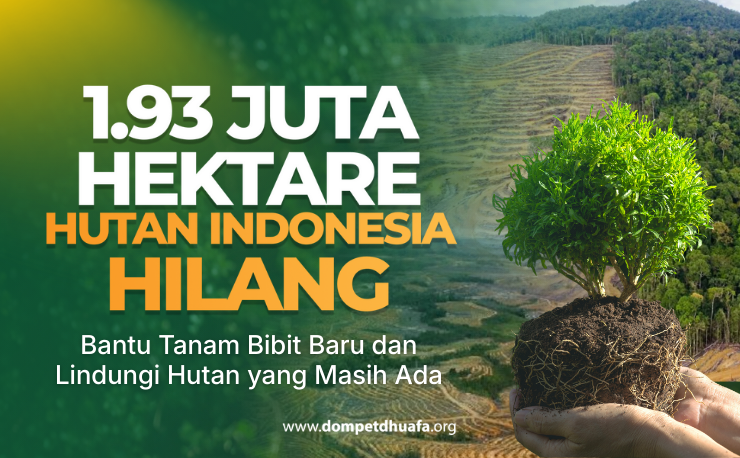
Deforestation, land conversion, and exploitation of natural resources increase the risk of disasters. When forests disappear, the absorption capacity of the soil decreases. Rainwater flows more quickly into rivers and settlements. Under certain conditions, flash floods become difficult to avoid.
Low-income communities often live in vulnerable areas. They have limited choices of where to live and how to make a living. When disasters strike, these groups lose more and recover more slowly. Zakat can serve as a social protection instrument that helps them survive and bounce back.
In some areas of Sumatra, deforestation due to large-scale land clearing has worsened environmental conditions. Data from Wahana Lingkungan Hidup Indonesia (Indonesian Environmental Agency) shows the loss of millions of hectares of forest in the last decade. Greenpeace Indonesia also reports a significant decline in forest cover in various provinces. This damage has a direct impact on communities living near forests and river basins. Flash floods destroy homes, agricultural land, and public facilities. In this situation, climate change zakat can be directed to help restore the lives of affected residents.
Read also: Help for Sumatra, What Can We Do?
Dompet Dhuafa’s Role in Managing Climate Change Zakat
Dompet Dhuafa has developed various humanitarian programs that respond to the impacts of environmental damage. The approach used is not only short-term assistance but also long-term recovery. Clean water programs, health services, and economic empowerment are part of these efforts.
In addition, Dompet Dhuafa encourages community involvement in protecti
ng the environment through tree planting programs. This initiative aims to restore forest functions, maintain water balance, and reduce the risk of future disasters. This program also opens up space for public participation in environmental improvement efforts.
Tree planting has long-term benefits for human life. Tree roots help retain rainwater and maintain soil structure. Tree canopies support microclimate balance and animal habitats. In the long term, restored forests help protect communities from recurring disasters.
Allah SWT says, “… Indeed, Allah will not change the condition of a people until they change what is in themselves. If Allah wills evil for a people, no one can repel it, and there is no protector for them other than Him.” (QS. Ar-Ra’d: 11).
Surah Ar-Rad verse 11 reminds us that change requires real effort. Supporting tree planting programs is a form of collective responsibility to improve damaged environmental conditions. Zakat climate change opens up new opportunities in zakat management that are relevant to the challenges of our time. As long as it is distributed appropriately and has an impact on protecting the lives of the mustahik, zakat can be part of the environmental solution.
Preserving the earth means preserving life. Every effort made today will determine the quality of life for future generations. The support provided is not only about planting trees, but about nurturing hope and shared responsibility.