


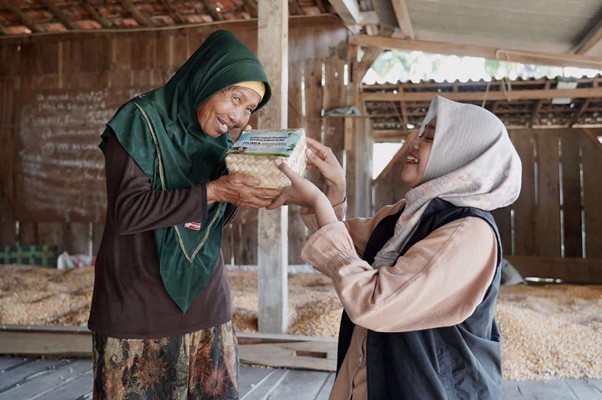
JAKARTA -— “Eid al-Adha has many meanings, one of which is about how we sacrifice our personal desires for the common good, for a greater good.”
The quote is taken from a video sermon by Quraish Shihab on his YouTube channel explaining the history and meaning of Eid al-Adha.
Eid al-Adha is known as the holiday that commemorates the story of the steadfastness and sacrifice of Prophet Ibrahim and Prophet Ismail in carrying out Allah SWT’s command.
Qurban is a means of training Muslims to test the strength of their faith. In addition to being servants who surrender themselves to Allah SWT, they are also social beings who have an obligation to share with others.
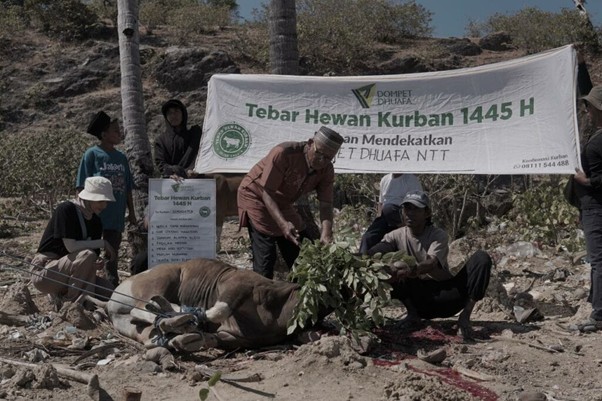
In addition to what is visible, there are also intangible benefits of qurbani. So many components are involved and benefit from it, both directly and indirectly. Even the benefits are long-lasting and have a broad social impact.
In line with the expansion of these benefits, Dompet Dhuafa has been initiating national qurbani through Tebar Hewan Kurban (THK) since 1994.
Benefits of Sacrifice Through Institutions
What are the benefits of sacrificing through institutions such as Dompet Dhuafa?
1. Right on Target for Those in Need
Sacrificing through institutions has its own practicalities. This is because institutions have a centralized committee, which in turn creates a structured and transparent mechanism.
For example, they ensure that the recipients are truly in need by conducting direct surveys, and they distribute the meat effectively. Data on the recipients is centralized and updated annually.
Dompet Dhuafa provides sacrificial offerings with transparent reporting, which is directly received by the donors within 14 days after the sacrifice is performed. Additionally, there is transparency regarding distribution points or regional data spread across the entire archipelago.
2. Empowering Local Farmers
Every THK, Dompet Dhuafa relies on local farmer partners who contribute as farmhands at DD Farm livestock centers.
These farmer partners receive training in livestock farming directly from experts. Under supervision, aspiring local farmers begin caring for livestock and are later released to operate independently, becoming farmers.
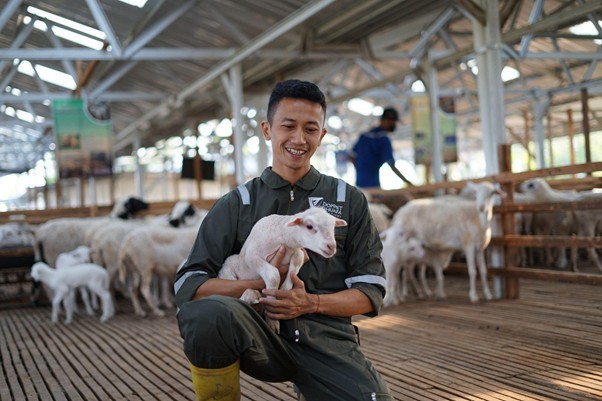
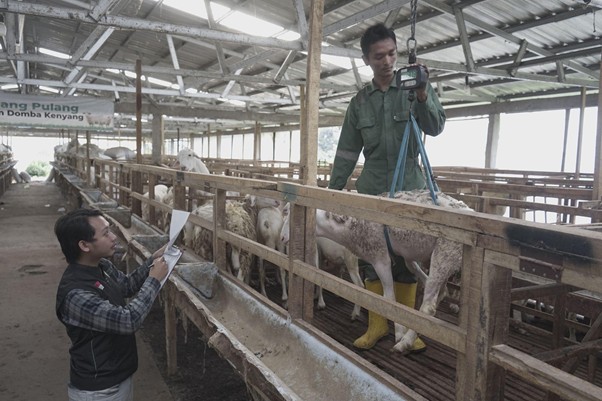
In addition to receiving wages, local farmers will also receive capital for barns and seeds so that they can become fully self-sufficient in their respective areas. Alhamdulillah, your sacrifice has contributed to the creation of new jobs.
3. Equitable Distribution to Remote Areas and Overseas
The surplus of sacrificial meat in urban areas has inspired Dompet Dhuafa to distribute sacrificial meat to reach the 3T regions (Remote, Frontier, and Outlying) in Indonesia.
According to the Institute for Demographic and Poverty Studies (IDEAS), urban centers like Jakarta experienced a surplus of 9,905 tons of sacrificial meat in 2024. Similarly, in West Java, cities like Bandung, Cimahi, and Sumedang had a surplus of 6,355 tons, while Sleman and Bantul in Yogyakarta reached 4,957 tons.
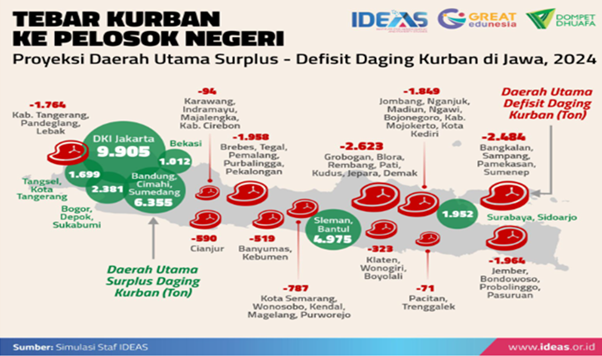
Results of the 2024 Projection of the Surplus Deficit of Sacrificial Meat by the Director of the Institute for Demographic and Poverty Studies IDEAS
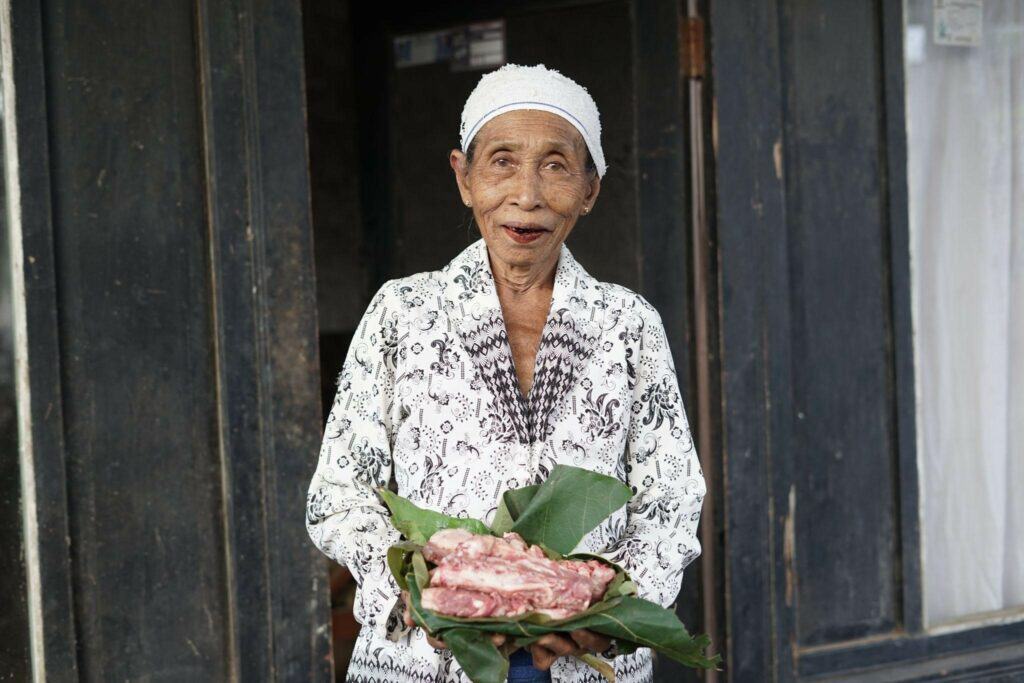
This phenomenon causes sacrificial meat to pile up in only a few areas in urban areas. To ensure the equitable distribution of sacrificial meat, this year Dompet Dhuafa will distribute sacrificial meat to more than 700 locations throughout Indonesia.
For overseas sacrifices, Dompet Dhuafa is targeting conflict-prone and disaster-prone areas, such as Palestine, Somalia, and Myanmar.
4. Enjoyable Qurbani Without Plastic Waste
For years, Dompet Dhuafa has been committed to performing qurbani without producing plastic waste. This is to protect the earth from climate damage caused by plastic waste, which produces high carbon emissions.
Residents of Deda Padas cut and chop sacrificial meat packed in rattan baskets to be distributed to THK beneficiaries
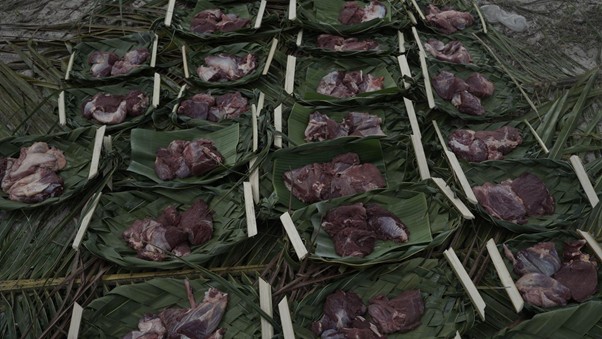
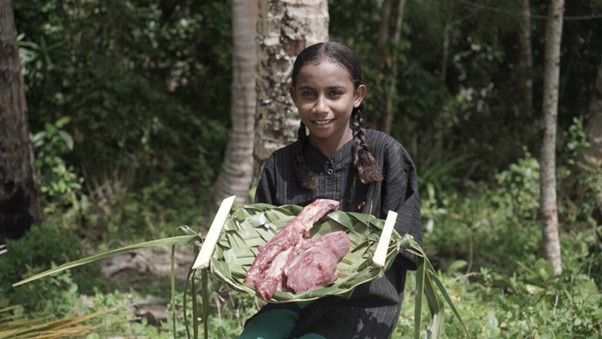
How is it done? After the sacrifice is slaughtered, the meat is placed in environmentally friendly containers such as banana leaves, bamboo baskets, or woven bamboo, up to the traditional Maluku-style kamdada made from young coconut leaves.
The basic materials mentioned above are renewable resources that are easily biodegradable.
5. Easy-to-Access Sacrifice Payment Channels
Dompet Dhuafa’s digitalization efforts continue to make it easier for sacrificial donors to perform their sacrifices anytime and anywhere. Alternative options in the form of digital services include the sacrificial donation page https://digital.dompetdhuafa.org/kurban and transactions through the Dompet Dhuafa Apps (DD Apps).
Additionally, sacrificial offerings can be made through mobile banking transfers at various banks, as well as via e-wallets such as ShopeePay, DANA, OVO, and others.
Read also: Is it permissible and valid according to Islam to pool funds for qurbani?
6. Affordable Sacrificial Animal Prices
Dompet Dhuafa offers a wide selection of sacrificial animals based on weight at affordable prices. For sheep/goats (Doka), the economical option (21-22 kg) is priced at Rp1,799,000; Doka Standard (23-25 kg) is priced at Rp1,999,
000; Medium Doka (26-28 kg) at Rp2,599,000; and Premium Doka (29-33 kg) at Rp2,999,000.
For cattle sacrifices, Dompet Dhuafa also offers the option of a 1/7 cow (250-300 kg) for Rp2,090,000 per individual and a full cow (250-300 kg) for Rp13,999,000.
Dompet Dhuafa strives to ensure your sacrifice is in accordance with Islamic law and is definitely male to maintain the sustainability of the livestock ecosystem on a macro level.
Well, sacrificing with Dompet Dhuafa is so easy and effective, isn’t it? Your sacrifice will also involve various components of society, thereby having a broad social impact. Let’s sacrifice now! Because Your Sacrifice Matters! (Dompet Dhuafa)
Text: Hany Fatihah Ahmad
Photo: DDTV
Editor: Dhika