


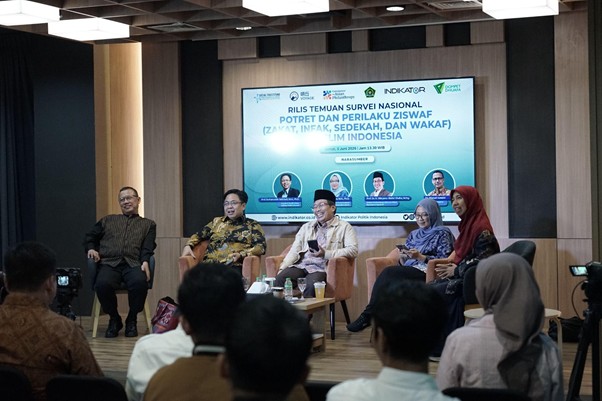
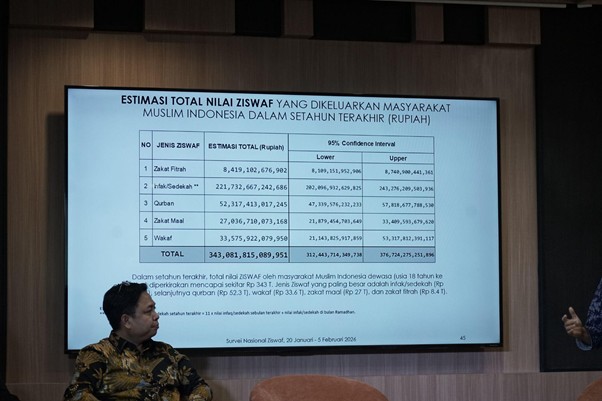
JAKARTA —— The total potential value of zakat, infak, sedekah, and wakaf (Ziswaf) contributed by the Indonesian public has once again reached a significant figure. The results of the National Survey on the Profile and Behavior of Ziswaf, conducted by the Social Trust Fund (STF) at UIN Syarif Hidayatullah Jakarta in collaboration with Indikator Politik Indonesia, Voyage, and Dompet Dhuafa, revealed that the total value of Ziswaf, as well as qurbani contributions made by the Indonesian Muslim community over the past year, reached approximately Rp343.08 trillion.
These findings were presented during the public release of the survey results titled “Portrait and Behavior of Ziswaf Among Indonesian Muslims,” which took place at the Sasana Budaya Rumah Kita Dompet Dhuafa in Pasar Minggu, South Jakarta, on Friday, June 5, 2026.
This survey is one of the largest studies mapping the philanthropic behavior of Muslims in Indonesia, involving 8,360 Muslim respondents aged 18 and older from across the country.
In his opening remarks, Waryono Abdul Ghafur, Director of Zakat and Waqf Empowerment at the Indonesian Ministry of Religious Affairs, noted that the survey results are important for reassessing the state of Islamic philanthropy in Indonesia, which has thus far been based on a potential zakat figure of approximately Rp327 trillion from previous studies.
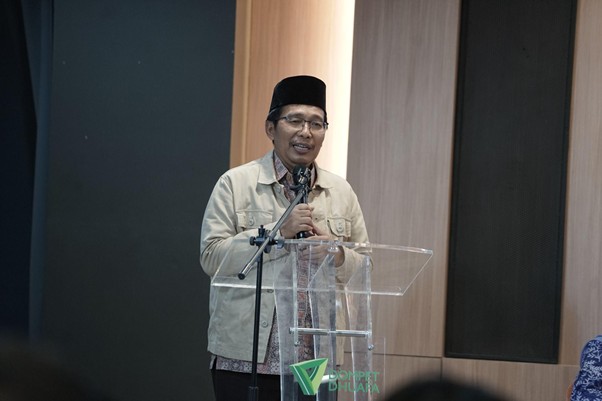
“This is a collaborative research effort; there is much to be done together regarding the zakat and waqf ecosystem. This survey is very important; it will certainly influence future policies related to Indonesian philanthropic institutions, as policy-making is based on research,” said Waryono in his opening remarks.
According to him, social and economic developments, as well as changes in public behavior, need to be reassessed so that policies adopted by the government and by zakat and waqf administrators can be based on up-to-date data. He hopes that the results of this survey can serve as a shared learning resource to strengthen the Islamic philanthropy ecosystem while also providing a foundation for formulating more relevant policies in the future, including in the management of national zakat.
Read also: Exposing the Power of ZISWAF Potential, RSAW Presents at IHEX 2022
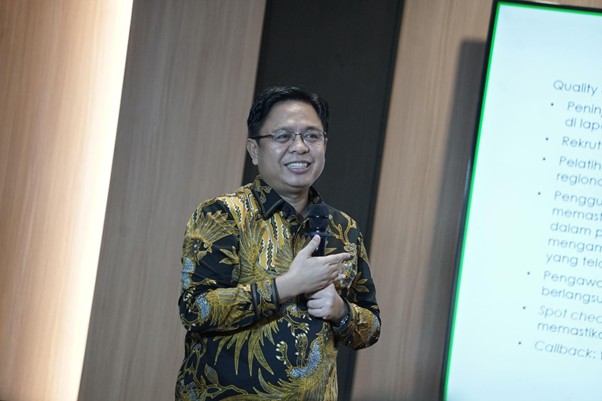
Meanwhile, Burhanuddin Muhtadi, Founder and Principal Researcher at Indikator Politik Indonesia, explained that this study was designed to provide a more representative picture of the philanthropic behavior of Indonesian Muslims.
“Based on the survey results, the largest contribution to total Islamic philanthropy comes from infak and sedekah, which amount to Rp221.7 trillion. This is followed by qurbani at Rp52.3 trillion, waqf at Rp33.6 trillion, zakat maal at Rp27 trillion, and zakat fitrah at Rp8.4 trillion,” said Burhanuddin in his presentation.
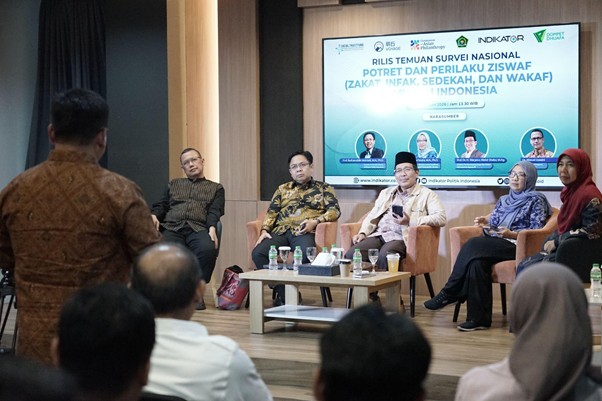
Survey results show that Islamic philanthropy remains an important part of the lives of Indonesian Muslims. A total of 98.5 percent of respondents reported paying zakat al-fitr in the past year, either in the form of goods or cash.
Infak and almsgiving are the most common forms of Ziswaf. It was recorded that 74.8 percent of respondents gave infak or alms within the past month, with the majority of distributions still carried out in person or offline.
Meanwhile, 10.2 percent of respondents performed the qurbani ritual within the past year, with the average value of the sacrifice reaching Rp2.84 million per person. In the waqf sector, public participation remains relatively low, with only 5.8 percent of respondents having made a waqf contribution in the past 12 months. Nevertheless, the potential for growth is significant. A total of 72.3 percent of respondents expressed interest in making monetary waqf contributions, opening up broad opportunities for strengthening productive waqf programs that benefit the community.
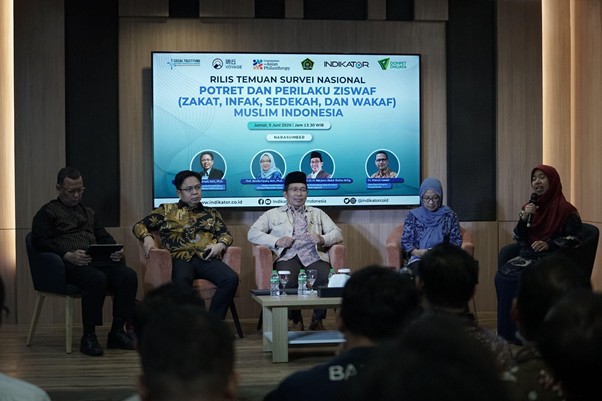
Amelia Fauzia, Director of the Social Trust Fund at UIN Syarif Hidayatullah Jakarta, revealed that Indonesia’s Muslim community is now adopting an increasingly progressive perspective on Islamic philanthropy. Zakat, infak, sedekah, and wakaf are no longer viewed merely as forms of consumptive aid, but rather as strategic instruments for economic empowerment, education, poverty alleviation, and even support for national development.
For Dompet Dhuafa—one of Indonesia’s largest national zakat management institutions and the host of the survey launch event—the findings of this study serve as a crucial reference for formulating future strategies for the management and distribution of Ziswaf funds.
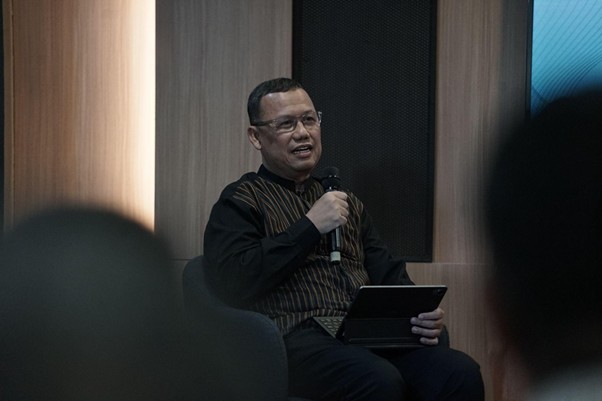
Ahmad Juwaini, Chairman of the Dompet Dhuafa Board of Directors, highlighted several issues that represent shared responsibilities and challenges for various institutions and stakeholders, including the relatively small amount of waqf contributions made by the public.
“I appreciate the results of this survey; they show that many people still believe waqf can only be performed by those with substantial wealth. In reality, it can start with even a small amount. Other challenges include the low allocation of funds for advocacy and the continued dominance of informal institutions as the preferred choice for donations. These findings present a shared task to strengthen financial literacy and improve the performance of Ziswaf in Indonesia,” said Ahmad Juwaini.
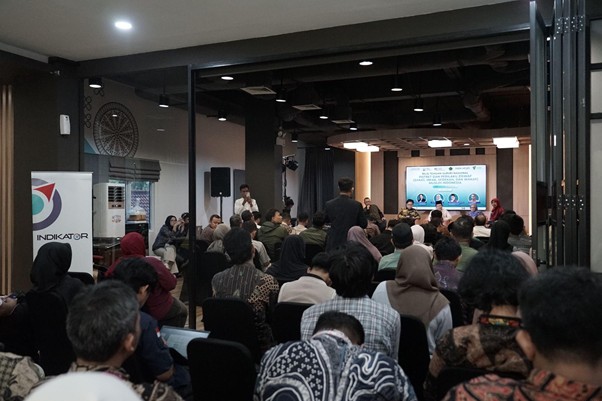
This data is expected to help organizations understand changes in the philanthropic behavior of the Muslim community, including their preferences for sustainable empowerment programs. The findings regarding the high level of public support for productive zakat also reinforce the direction of the programs that Dompet Dhuafa has been implementing across various sectors, such as education, health, the economy, social welfare, as well as da’wah and culture.
In addition to serving as a measure of national philanthropic potential, this survey also provides insight into the public’s expectations for the management of community funds to become increasingly professional, transparent, and impactful.
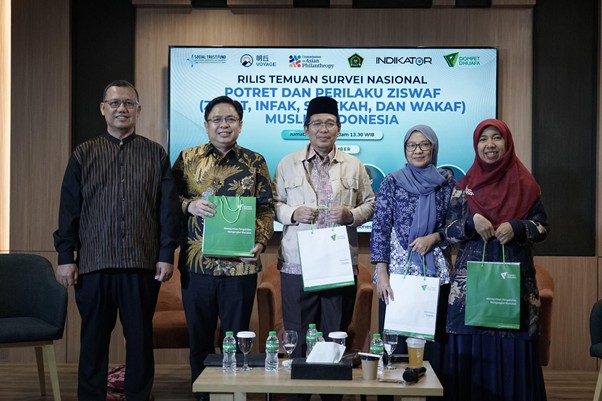
For Dompet Dhuafa, the survey results can serve as a guide in strengthening program innovation, building public trust, and expanding the contribution of Islamic philanthropy in addressing various social challenges in Indonesia. (Dompet Dhuafa)
Text and photos: Anndini Dwi Putri
Editor: Dhika