

Climate change is becoming increasingly apparent through shifting weather patterns and the increased frequency of natural disasters in various parts of the world. This phenomenon is a real experience for communities in various regions. Climate change has affected global average temperatures and altered rainfall cycles, increasing the risk of floods, droughts, and other disasters. The Intergovernmental Panel on Climate Change (IPCC) notes that the average surface temperature of the earth has increased by about 1.1°C since the late 19th century, and most of this increase is due to human activities such as fossil fuel combustion and deforestation. This means that the situation we face today is the result of environmental changes that have been going on for a long time.
Read also: History of Flash Floods Around the World
The Impact of Climate Change on the Water Cycle
Climate change has altered the way water moves in nature. As air temperatures rise, the atmosphere’s ability to hold water vapor also increases. As a result, extreme rainfall tends to occur more frequently. At other times, areas that normally receive moderate rainfall may experience prolonged droughts. Climate change triggers changes in rainfall patterns that are increasingly difficult to predict. When these changes coincide with a damaged environment, the risk of flash floods becomes greater.
These changes in the water cycle affect not only rainfall but also rainfall distribution. River headwaters that have lost their vegetation cover tend to accelerate the flow of water downstream. When extreme rainfall occurs, rivers are unable to effectively contain the water discharge, making it easier for floods to spread to residential areas.
Read also: The Story of Prophet Noah and Its Relevance Today
Environmental Changes in Indonesia
The impact of climate change is more severe when it occurs in areas where environmental conditions are already fragile. In countries with tropical forests and high rainfall such as Indonesia, small changes in rainfall patterns can have a major impact if the carrying capacity of nature continues to decline.
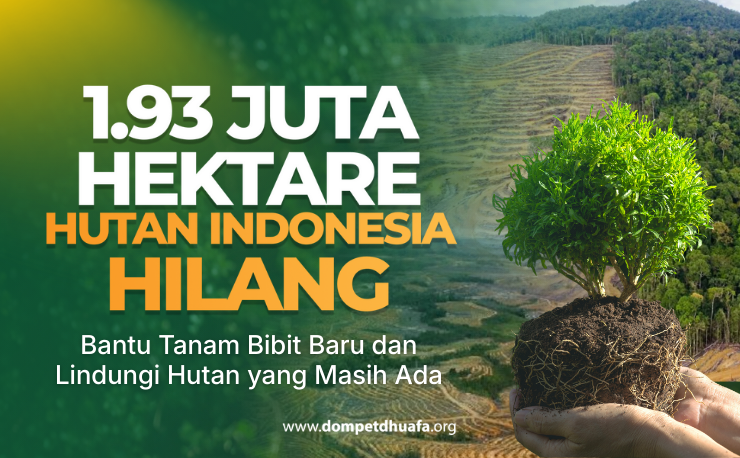
Environmental changes have a real impact on Indonesia as a country with tropical forests and high rainfall. Deforestation and land conversion in various regions have affected the stability of the water cycle. Global Forest Watch data shows that Indonesia lost millions of hectares of forest between 2002 and 2021 due to massive logging and land clearing.
The loss of forests affects the soil’s ability to absorb water. Trees that are decades or centuries old have roots that absorb and store water when it rains, but deforestation eliminates this water absorption function. As a result, when heavy rains fall, the water flows directly into rivers and drainage channels without being retained in the soil. This increases the risk of flooding and prolongs the duration of floods.
Read also: The Flood of Noah, What Valuable Lessons Can We Learn?
Climate Change and Flash Floods in Various Regions of Indonesia
The natural conditions in Sumatra and several other regions in Indonesia show a clear relationship between climate change and disaster risk. The flash floods that occurred in these regions are examples of how environmental changes accelerate the impact of disasters. The clearing of forests for palm oil plantations and mining, as well as the exploitation of forests without balanced management, has caused upstream areas to lose their natural buffer systems.
Damaged forests are no longer able to retain rainwater, causing downstream areas to suddenly receive large amounts of water. The flash floods that hit the area forced many families to leave their homes and face damage to public facilities. This pattern shows that climate change does not occur separately from human activities that damage the environment.
Several international institutions have noted a strong link between climate change and increased disaster risk. A report by the United Nations Office for Disaster Risk Reduction (UNDRR) shows that the frequency of weather-related disasters has increased sharply in the last four decades, particularly floods and severe storms. Climate and environmental changes such as global warming, reduced forest cover, and soil degradation all contribute to the scale of disasters.
Read also: History of Flash Floods in the World
Human Responsibility towards Nature
In Surah Al-Baqarah verse 30 of the Quran, Allah explains that humans were created as caliphs on earth, who have a responsibility to protect and preserve Allah’s creation on earth. Allah also commands in Surah Al-A’raf verse 56 that humans were created to manage the earth well and not to cause destruction.
“Do not cause corruption on the earth after it has been set in order. Pray to Him with fear and hope. Indeed, Allah’s mercy is very close to those who do good.” (QS. Al-A’raf: 56).
Protecting the environment is part of every human being’s responsibility. The environmental damage that occurs today often stems from human actions that ignore the preservation of nature.
When nature is disturbed, human social life changes. Children lose access to school during floods, adults lose their jobs because agricultural land is damaged, and health services are disrupted because facilities are inaccessible. These impacts show that environmental changes affect not only nature but also the social and economic structures of society. This situation encourages people to not just stand by and watch disasters as separate natural events. We need to work together to take social responsibility so that the natural environment can improve.
Read also: Caring for Sumatra, Ultra Voucher Delivers Donations and Logistical Aid via Dompet Dhuafa
Mitigation Efforts Through Reforestation
One important effort in dealing with the impacts of climate change is reforestation or tree planting. Trees play an important role in maintaining the balance of the ecosystem. They help absorb rainwater, maintain soil moisture, and bind carbon, which is one of the causes of global warming.
Planting trees is not just a symbolic action. Every tree that is planted and cared for has a real impact on the carrying capacity of the environment. This activity can help nature control rainwater runoff and slow down soil erosion, thereby reducing the risk of flooding.
Dompet Dhuafa initiated a tree planting movement as part of a long-term solution to environmental damage. This program invites the community to participate in planting and caring for trees in various areas that have experienced deforestation. With widespread participation, this effort has become a concrete step in restoring the environment.
Through this program, anyone can contribute according to their abilities. Support not only helps repair damaged environments, but also supports wildlife habitats, improves groundwater balance, and contributes to carbon sequestration, which helps combat climate change.
Climate change is a sign that the way humans treat nature will determine the quality of life in the future.
Ongoing environmental change is not something that can be taken lightly. We all have a role to play in protecting the earth. Through tangible contributions, particularly in the form of tree planting and participation in environmental restoration efforts, we are helping to protect the future of generations to come. Supporting tree planting programs is one concrete step that anyone who cares about a more sustainable life can take.